
News
Understanding Voltage Options: 12V, 24V, and 48V Power Supplies Compared
Selecting the right power supply voltage is a foundational decision in industrial and commercial system design. Whether you're working with control panels, automation systems, or telecommunications infrastructure, the choice between 12V, 24V, and 48V affects efficiency, safety, cost, and long-term reliability. This guide breaks down how these voltage levels differ and how to choose the right one for your application.
How Transformers Relate to 12V, 24V, and 48V Power Supplies
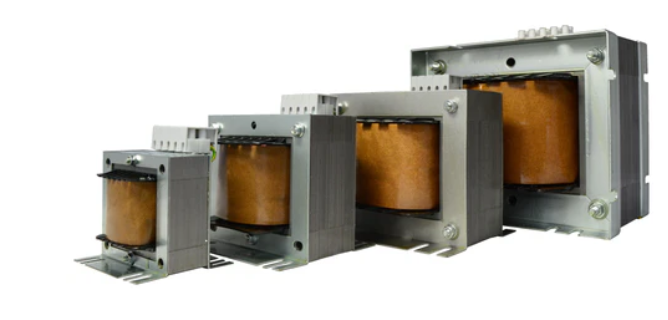
In many industrial and commercial systems, transformers and DC power supplies work together as part of the wider electrical infrastructure. A single phase transformer may be used in smaller installations, while a 3 phase transformer is more common in larger industrial environments where higher power capacity and balanced loads are required.
For applications where electrical separation and additional protection are important, an isolation transformer 240v may also be used before power is converted and regulated for 12V, 24V, or 48V DC equipment. This distinction is important: transformers adjust AC voltage levels, while DC power supplies provide the stable low-voltage output needed by control panels, sensors, automation systems, and other connected equipment.
What Do 12V, 24V, and 48V Mean in Power Supply Terms
Voltage refers to the electrical potential difference that drives current through a circuit. In simple terms, it’s the “push” that moves electricity from a power source to a device.
For a given power requirement (measured in watts), voltage and current are inversely related. Higher voltage allows the same amount of power to be delivered with lower current. This matters because current directly impacts heat generation, cable thickness, and energy losses.
-
Lower voltage (12V) → Higher current needed → More heat and thicker cables
-
Higher voltage (48V) → Lower current needed → Greater efficiency and reduced losses
Understanding this relationship is key to making meaningful comparisons between 12V, 24V, and 48V systems.
Common Applications for Each Voltage Level
Voltage selection is rarely arbitrary—it’s driven by application requirements, industry standards, and operating environments.
12V Power Supplies
12V systems are commonly used in low-power and safety-sensitive applications. Their relatively low voltage makes them easier to work with and safer in environments where human contact is more likely.
Typical uses include:
-
LED lighting systems
-
Small electronic devices
-
Control circuits
-
Automotive and mobile systems
12V is ideal where simplicity, cost, and safety are priorities, but it becomes less efficient as power demands increase due to higher current requirements.
24V Power Supplies
24V is the industry standard for many industrial and automation environments. It strikes a practical balance between safety and efficiency, making it versatile across a wide range of systems.
Typical uses include:
-
Industrial control panels
-
PLC (Programmable Logic Controller) systems
-
Sensors and actuators
-
Instrumentation and automation equipment
Compared to 12V, 24V systems reduce current draw for the same power output, improving efficiency while still remaining within generally safe handling limits.
48V Power Supplies
48V systems are designed for higher efficiency and scalability, particularly where power needs to be transmitted over longer distances.
Typical uses include:
-
Telecommunications infrastructure
-
Data centres and networking equipment
-
Distributed power systems
-
High-efficiency industrial setups
By significantly reducing current, 48V systems minimise energy losses and allow for thinner cables and longer cable runs. This makes them especially valuable in large-scale or high-demand environments.
Safety and Efficiency Considerations
Voltage level has a direct impact on both system safety and performance.
Efficiency:
Higher voltage systems (like 48V) are generally more efficient because they reduce current, which in turn lowers resistive losses (heat). This improves overall energy efficiency and reduces cooling requirements.
Cable sizing and voltage drop:
Lower voltage systems require thicker cables to handle higher current. They are also more susceptible to voltage drop over distance, which can affect performance.
Heat generation:
More current means more heat. In tightly packed systems, this can lead to overheating risks and reduced component lifespan.
Safety:
Lower voltages (12V and 24V) are typically considered safer for human interaction and are often preferred in accessible environments. Higher voltages require more careful system design, insulation, and compliance with safety standards.
How to Choose the Right Voltage for Your Application
Choosing the right voltage depends on a combination of technical and practical factors:
-
Power requirements: Higher loads may benefit from 24V or 48V systems to improve efficiency
-
Distance: Longer cable runs favour higher voltage to reduce losses
-
Environment: Harsh or industrial environments may standardise around 24V
-
Safety requirements: Lower voltages may be necessary where direct contact is possible
-
System scalability: 48V systems are often better suited for future expansion
-
Cost considerations: Balance upfront costs (e.g. components, cabling) with long-term efficiency gains
There is no one-size-fits-all answer—the optimal choice depends on how these factors interact in your specific application.
When to Seek Specialist Advice
While many applications follow established voltage conventions, there are situations where expert input is essential.
Please contact our engineers for guidance and advice when:
-
Designing complex or high-power systems
-
Working in regulated industries with strict compliance requirements
-
Integrating multiple voltage systems
-
Experiencing unexplained inefficiencies or equipment failures
-
Planning large-scale infrastructure or future expansion
Incorrect voltage selection can lead to performance issues, safety risks, and costly redesigns. A qualified expert can help ensure your system is both compliant and optimised from the outset.
Final Thoughts
Understanding the differences between 12V, 24V, and 48V power supplies is crucial for building efficient, reliable, and safe electrical systems. While 12V offers simplicity, 24V provides a versatile industry standard, and 48V delivers superior efficiency for larger-scale applications.
The right choice ultimately comes down to your specific needs—balancing performance, safety, and long-term scalability.
