
Resources
16 Amp vs 32 Amp 110V Sockets: Which Plug Configuration Does Your Site Need?
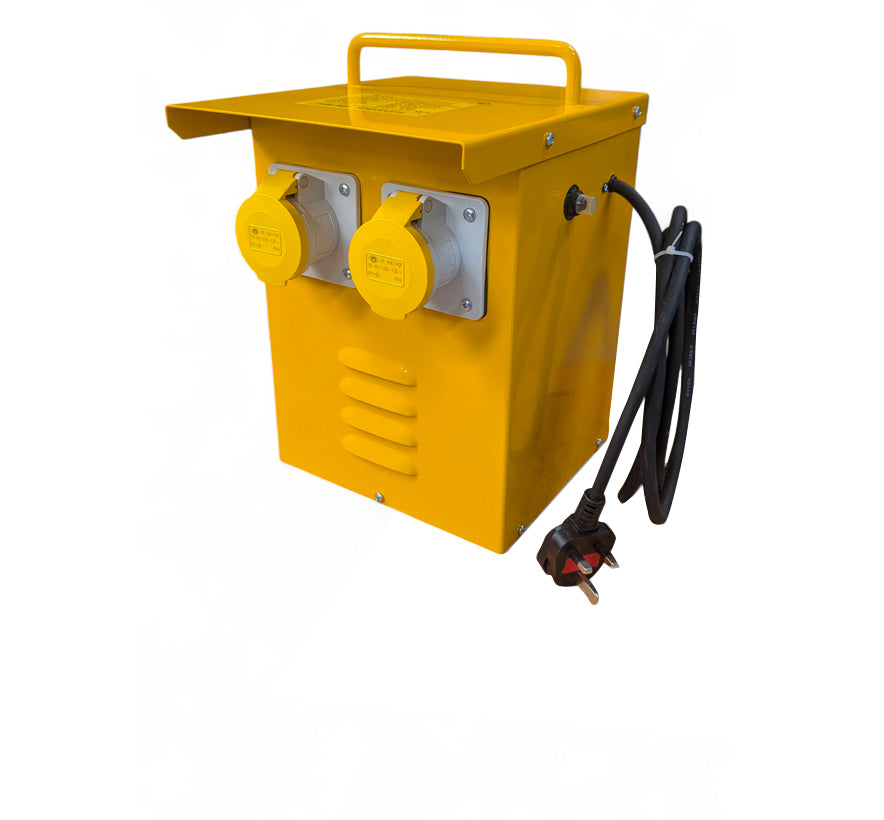
When setting up temporary power on a construction site, event venue, industrial facility, or maintenance project, choosing the correct 110V socket configuration is essential for safety, performance, and compliance. One of the most common questions site managers and contractors ask is:
Should I use a 16 amp or 32 amp 110V socket?
The answer very much depends on the equipment you need to power, the total electrical load, and your site's operational requirements. This explains the differences between 16A and 32A 110V sockets to help you determine which solution is right for your particular project.
What Are 110V Site Sockets?
What Are
110V sockets are commonly used on construction and industrial sites because they provide a safer power supply than standard mains voltage. Most UK construction sites use 110V centre-tapped-to-earth (CTE) systems, reducing the risk of serious electric shock if equipment is damaged or exposed to harsh conditions.
These sockets are easily identifiable by their yellow industrial plugs and are designed to withstand demanding site environments.
What Is a 16 Amp 110V Socket?
A 16A 110V socket is the most commonly used site power connection for smaller tools and equipment.
Typical Applications
-
Power drills
-
Circular saws
-
Angle grinders
-
Work lights
-
Small transformers
-
Portable power tools
Key Benefits
✅ Widely available on construction sites
✅ Compact and easy to connect
✅ Suitable for most handheld equipment
✅ Lower installation and equipment costs
Power Capacity
A 16A 110V socket can supply approximately:
110V × 16A = 1,760 watts (1.76kW)
This makes it ideal for powering individual tools or lower-demand equipment.
What Is a 32 Amp 110V Socket?
A 32A 110V socket is designed for higher-powered equipment that requires more current than a standard 16A supply can provide.
Typical Applications
-
Large site transformers
-
Industrial machinery
-
Heavy-duty pumps
-
Site cabins and welfare units
-
Large compressors
-
Multiple tools from a single distribution board
Key Benefits
✅ Higher power capacity
✅ Supports larger equipment loads
✅ Reduces the risk of circuit overload
✅ Ideal for demanding industrial environments
Power Capacity
A 32A 110V socket can supply approximately:
110V × 32A = 3,520 watts (3.52kW)
This is double the capacity of a 16A socket.
16A vs 32A 110V Sockets: Quick Comparison
|
Feature |
16A 110V Socket |
32A 110V Socket |
|
Maximum Current |
16 Amps |
32 Amps |
|
Power Output |
1.76kW |
3.52kW |
|
Plug Size |
Smaller |
Larger |
|
Typical Use |
Hand tools and lighting |
Heavy equipment and multiple loads |
|
Cost |
Lower |
Higher |
|
Portability |
Excellent |
Good |
|
Site Applications |
General construction |
Industrial and high-demand sites |
How to Determine Which Socket Your Site Needs
Choose a 16A Socket If:
-
You are using standard site tools.
-
Equipment draws less than 16 amps.
-
You need multiple connection points for small loads.
-
Portability is a priority.
For general construction projects, 16A sockets are often the most practical and cost-effective choice.
Choose a 32A Socket If:
-
Equipment requires higher power demands.
-
You are supplying multiple tools from one source.
-
Large transformers or machinery are being used.
-
You want additional capacity for future expansion.
A 32A connection provides greater flexibility for larger projects and demanding applications.
Can You Plug a 16A Plug into a 32A Socket?
Not directly.
Industrial plug systems are intentionally designed with different physical configurations to prevent incorrect connections. To connect equipment safely, you may need a suitable adapter or distribution unit designed for the application.
Always ensure any adapters comply with current electrical safety regulations and are appropriate for site use.
Safety Considerations for 110V Site Power
Regardless of whether you choose 16A or 32A sockets, site safety should remain the top priority.
Best Practices Include:
-
Regular electrical inspections
-
PAT testing of portable equipment
-
Using weatherproof connectors outdoors
-
Avoiding overloaded circuits
-
Installing RCD protection where required
-
Using correctly rated cables and extension leads
Proper power planning can significantly reduce downtime, equipment damage, and safety risks.
Which 110V Socket Is Best for Your Site?
There is no one-size-fits-all answer.
For most construction sites and portable tools, 16A 110V sockets provide a reliable, cost-effective solution. However, if you're powering larger plant equipment, transformers, or multiple devices simultaneously, 32A 110V sockets offer the additional capacity needed to keep operations running efficiently.
Before selecting a configuration, calculate your total load requirements and consider future expansion. Investing in the right power infrastructure from the start can improve safety, productivity, and overall project efficiency.
Frequently Asked Questions
What is the difference between 16A and 32A 110V plugs?
The main difference is current capacity. A 32A plug can deliver twice the electrical current of a 16A plug, allowing it to power larger equipment and heavier electrical loads.
Are 32A sockets safer than 16A sockets?
Neither is inherently safer. Safety depends on using equipment that matches the socket rating and following correct installation and operating procedures.
Can construction tools use a 32A socket?
Many tools use 16A plugs and would require a suitable distribution board or adapter to connect safely to a 32A supply.
Why do construction sites use 110V power?
110V supplies reduce the risk of serious electric shock, making them the preferred choice for many construction and industrial environments.