
Resources
Mains Power Distribution for Industry
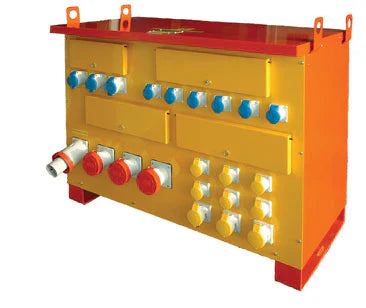
From Workshop to Building Site: Choosing the Right Transformer for the Job
Reliable power distribution is fundamental to industrial operations, whether supplying a manufacturing facility, a warehouse, or a temporary construction site. Selecting the right transformer is a key part of ensuring equipment receives the correct voltage while maintaining safety, efficiency, and compliance. The requirements of a permanent industrial installation can differ significantly from those of a temporary site, making it important to understand how transformers fit into the wider power distribution system.
Why Transformers Are Essential in Industrial Settings
Transformers are designed to safely increase or decrease voltage levels to suit the requirements of specific equipment and applications. By matching supply voltage to operational needs, they help protect machinery, improve efficiency, and support safe working practices.
In the UK construction sector, 110V transformers are widely used to power portable tools and equipment. The lower voltage reduces the risk of serious electric shock, making it a safer option for site environments where cables, tools, and workers are frequently exposed to demanding conditions. In manufacturing and commercial settings, transformers may also be used to supply specialist equipment operating at voltages different from the incoming mains supply.
Key Components in Industrial Power Distribution
An industrial power distribution system consists of several interconnected elements, each performing a critical role in delivering electricity safely and efficiently throughout a facility.
Incoming Supply (LV or HV)
The system begins with a low-voltage (LV) or high-voltage (HV) electrical supply from the utility network or an on-site generation source.
Main Switchgear
Switchgear controls, isolates, and protects electrical circuits. It provides a central point for managing power distribution and responding to faults.
Busbar Trunking
Busbar systems distribute power efficiently across large facilities, providing a flexible and space-saving alternative to traditional cabling.
Distribution Boards
Distribution boards divide the electrical supply into separate circuits, allowing power to be safely distributed to different areas and equipment.
Transformers
Transformers adapt voltage levels to suit operational requirements, ensuring equipment receives the correct supply while maintaining electrical safety.
Protective Devices
Circuit breakers, fuses, and protective relays help prevent damage from overloads, short circuits, and fault conditions.
Metering and Monitoring Systems
Modern monitoring equipment provides real-time visibility of energy consumption, system performance, and potential issues, helping operators optimise efficiency and reduce costs.
Together, these components create a robust infrastructure that manages electrical loads, protects assets, and supports regulatory compliance.
Load Management and Phase Balancing
Effective load management is essential in industrial environments where large numbers of motors, machines, and electrical systems operate simultaneously. One of the key objectives is maintaining balanced loads across all phases of a three-phase supply.
Poor phase balancing can lead to overheating, increased energy consumption, reduced equipment life, and unnecessary strain on electrical infrastructure. To improve performance and power quality, modern installations often incorporate:
-
Power factor correction to reduce reactive power and improve energy efficiency.
-
Harmonic filtering to minimise electrical distortion caused by variable-speed drives and other electronic equipment.
-
Smart energy monitoring systems that provide detailed insights into consumption patterns and system performance.
These technologies help maintain stable operation while reducing operating costs and improving overall reliability.
Temporary vs Permanent Distribution Systems
Industrial power distribution requirements vary depending on whether the installation is temporary or permanent.
Temporary Distribution Systems
Temporary systems, such as those used on construction sites, are designed for flexibility, portability, and durability. Equipment must be capable of withstanding harsh environmental conditions while being easy to install, relocate, and maintain. Portable transformers, robust cabling, and weather-resistant distribution units are common features.
Permanent Distribution Systems
Permanent installations are engineered with long-term performance in mind. They typically include greater capacity for future expansion, more sophisticated protection systems, and integrated monitoring technologies. Design considerations focus on reliability, efficiency, maintainability, and compliance throughout the operational life of the facility.
Choosing equipment appropriate to the intended application helps ensure both safety and cost-effectiveness.
Safety, Compliance, and Risk Mitigation
Safety remains a primary consideration in all industrial power distribution systems. Properly designed installations incorporate multiple layers of protection to minimise risk to personnel, equipment, and operations.
Key areas of protection include:
-
Short-circuit protection to prevent damage caused by fault currents.
-
Earth fault protection to detect leakage currents and reduce the risk of electric shock.
-
Overload prevention to protect cables and equipment from excessive current.
-
Proper segregation of circuits improves safety, simplifies maintenance, and reduce the likelihood of faults spreading through the system.
Compliance with relevant electrical standards and regulations not only helps organisations meet legal obligations but also reduces downtime, prevents costly equipment failures, and supports safe, reliable operation across the entire facility.
By understanding the role of transformers and the wider distribution network, industrial operators can make informed decisions that improve safety, efficiency, and long-term performance.