
Resources
Converting Direct Current to Alternating Current: Industrial Solutions
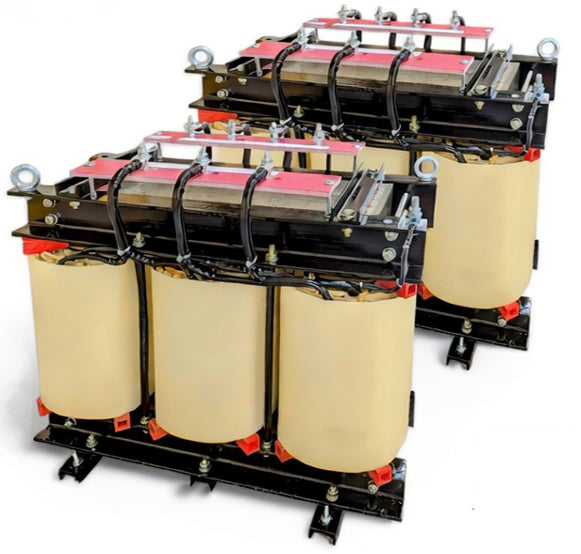
Modern industrial systems rarely rely on a single type of electrical power. Instead, they often combine direct current (DC) and alternating current (AC) to meet the needs of different equipment and processes. As a result, converting DC to AC efficiently and reliably is a critical part of many industrial power strategies. This guide explains why DC-to-AC conversion is necessary, how it’s achieved, and what to consider when selecting the right solution.
Understanding DC and AC Power in Industry
Direct current (DC) and alternating current (AC) differ in how electrical energy flows.
-
DC power flows in a constant direction and is commonly supplied by batteries, solar panels, and electronic control systems.
-
AC power periodically changes direction and is the standard for grid electricity and most industrial machinery.
In industrial environments, both forms coexist because they serve different purposes. DC is often used for control systems, storage, and electronics, while AC is preferred for driving motors, heavy equipment, and large-scale infrastructure. This duality creates the need for reliable conversion between the two.
Why DC-to-AC Conversion Is Required
There are several common scenarios where DC power must be converted into AC:
-
Battery-based systems: Backup power systems and energy storage solutions store energy as DC but must supply AC to run equipment during outages.
-
Renewable energy installations: Solar panels generate DC electricity, which must be converted to AC for use in industrial facilities or to feed into the grid.
-
Mobile and remote operations: Vehicles, off-grid installations, and temporary setups often rely on DC sources but need to power standard AC equipment.
-
Control systems integration: Industrial control systems may operate on DC while interfacing with AC-powered machinery.
Without conversion, these systems would be unable to power the majority of industrial equipment designed for AC operation.
Industrial DC-to-AC Conversion Methods
Different technologies are used to convert DC into AC, depending on the application, scale, and performance requirements.
Inverters
Inverters are the most common method of DC-to-AC conversion. They electronically switch DC input at high speed to create an AC output waveform.
Key considerations include:
-
Waveform quality:
-
Modified sine wave inverters are simpler and more cost-effective but may not suit sensitive equipment.
-
Pure sine wave inverters produce a clean output similar to grid power, making them suitable for motors, precision instruments, and critical systems.
-
Power rating:
The inverter must be sized to handle both the continuous load and any peak or startup demands, particularly for motor-driven equipment. -
Efficiency and reliability:
Industrial inverters are designed to minimise losses and operate continuously in demanding environments.
Inverters are widely used in applications ranging from small backup systems to large-scale renewable energy installations.
Integrated Conversion Systems
In many industrial settings, DC-to-AC conversion is built into larger systems rather than provided as a standalone device.
These integrated solutions are commonly found in:
-
Uninterruptible power supplies (UPS)
-
Renewable energy systems (e.g. solar inverters integrated with storage)
-
Industrial control and automation platforms
-
Telecom and data infrastructure
By embedding conversion within a broader system, these solutions can offer improved efficiency, simplified installation, and better coordination between components.
Key Factors When Selecting a Conversion Solution
Choosing the right DC-to-AC conversion solution requires careful evaluation of several factors:
-
Load type:
Resistive loads (like heaters) are simpler to support, while inductive loads (like motors) require higher-quality waveforms and greater startup capacity. -
Starting current:
Many industrial machines draw significantly more power at startup than during normal operation. The conversion system must handle these surges. -
Duty cycle:
Continuous operation demands robust, high-efficiency systems, whereas intermittent use may allow for more compact solutions. -
Environmental conditions:
Temperature, dust, moisture, and vibration can all affect performance. Industrial-grade equipment is often required for harsh environments. -
Scalability and future expansion:
Systems should be designed with potential growth in mind to avoid costly upgrades later.
Common Mistakes to Avoid
Even well-designed systems can run into problems if key factors are overlooked. Some of the most common mistakes include:
-
Under-sizing the inverter:
Failing to account for peak loads or startup currents can lead to shutdowns or equipment damage. -
Ignoring waveform requirements:
Using a low-quality waveform with sensitive or inductive equipment can cause inefficiency, overheating, or malfunction. -
Overlooking harmonic distortion:
Poor-quality power output can introduce harmonics that affect system performance and lifespan. -
Mismatching output characteristics:
Voltage, frequency, and phase must align with the requirements of the connected equipment. -
Neglecting environmental factors:
Installing non-industrial equipment in harsh conditions can lead to premature failure.
Final Thoughts
DC-to-AC conversion is a fundamental requirement in modern industrial systems, enabling seamless integration between energy sources and equipment. Whether through standalone inverters or integrated systems, the right solution ensures reliable operation, energy efficiency, and long-term performance.
By understanding the underlying technologies and carefully evaluating your application’s needs, you can select a conversion approach that supports both current demands and future growth.
Electro-Wind LTD Specialises in both DC to AC conversion and AC to DC conversion.