
Resources
kVA Ratings Explained: Understanding Transformer Power Ratings
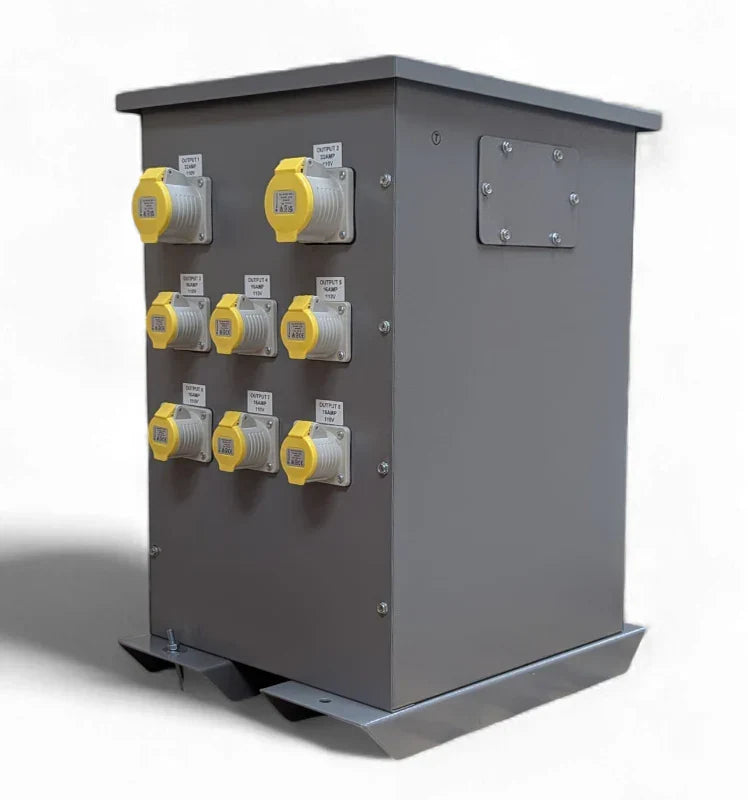
Transformers are the backbone of electrical distribution, but selecting the right size can make or break performance. Understanding kVA ratings ensures safe, efficient, and long-lasting transformer operation.
This guide explains what kVA means, how it differs from kW, and why correct sizing is essential for industrial and commercial applications.
What Does kVA Mean?

kVA stands for kilovolt-amperes, a measure of apparent power.
-
Apparent power combines voltage and current, without factoring in how efficiently the power is used.
-
Transformers are rated in kVA rather than kW because they must handle all the current, regardless of load type or power factor.
By rating in kVA, manufacturers ensure the transformer can safely deliver power under varying load conditions.
kVA vs kW: What’s the Difference?
While kVA measures apparent power, kW measures real power — the power actually used by equipment.
The power factor in an AC circuit equals 1 (unity) when the voltage and current are in phase, meaning the phase angle θ is 0°. This occurs in purely resistive circuits, or when capacitive and inductive reactance’s cancel each other out.
Power factor (PF) bridges the gap:
kW=kVA×PF
The Power Triangle

The relationship between real power, reactive power, and apparent power can be expressed by representing the quantities by vectors.
Example:
-
Industrial motor draws 50 kVA at a 0.8 PF
-
Real power: 50 x 0.8 = 40kW
Why it matters: Two transformers with the same kVA rating can support different kW loads depending on load type and power factor.
How Transformer kVA Ratings Are Calculated
Transformer ratings are determined by voltage and current:

Key points:
-
Both primary and secondary voltages matter
-
Load characteristics (resistive, inductive) influence sizing
-
Peak and continuous loads must be considered
Correct calculation ensures the transformer can handle full-load conditions without overheating or voltage drop.
Why Correct kVA Sizing Matters
Incorrect kVA selection leads to multiple issues:
-
Overheating → insulation damage and fire risk
-
Voltage instability → equipment malfunctions
-
Inefficiency → higher energy losses
-
Reduced service life → early transformer failure
Choosing the right kVA prevents downtime, lowers maintenance costs, and maximizes transformer lifespan.
Practical Examples of kVA Requirements
Here’s how typical equipment translates into kVA:
|
Equipment |
Power (kW) |
Power Factor |
kVA Required |
|---|---|---|---|
|
Small industrial motor |
15 kW |
0.8 |
18.75 kVA |
|
CNC machine |
10 kW |
0.85 |
11.76 kVA |
|
Lighting panel |
5 kW |
1.0 |
5 kVA |
Tip: Always include a safety margin of 10–20% to accommodate future load increases.
Final Thoughts
Understanding kVA ratings is crucial for transformer selection. Correct sizing ensures:
-
Safe operation
-
Stable voltage
-
Efficient energy usage
-
Longer equipment lifespan
By linking voltage, current, and load requirements, you can choose transformers that meet your needs today — and are ready for tomorrow’s demands.